
What Are Thermal Labels and Tags?
Thermal labels (thermal adhesive labels) and tags are widely used in logistics, warehousing, retail, e-commerce, apparel, and inventory management. For many buyers, the first question is not about technical specifications, but about what these products actually are, how they are different, and which one fits a real application.
In simple terms, thermal labels are usually used for sticking, while thermal tags are usually used for hanging. Both are used in thermal printing systems and both can carry barcodes, SKU information, pricing, shipping data, and other variable information. Understanding the difference between them is the first step toward choosing the right product for your business.
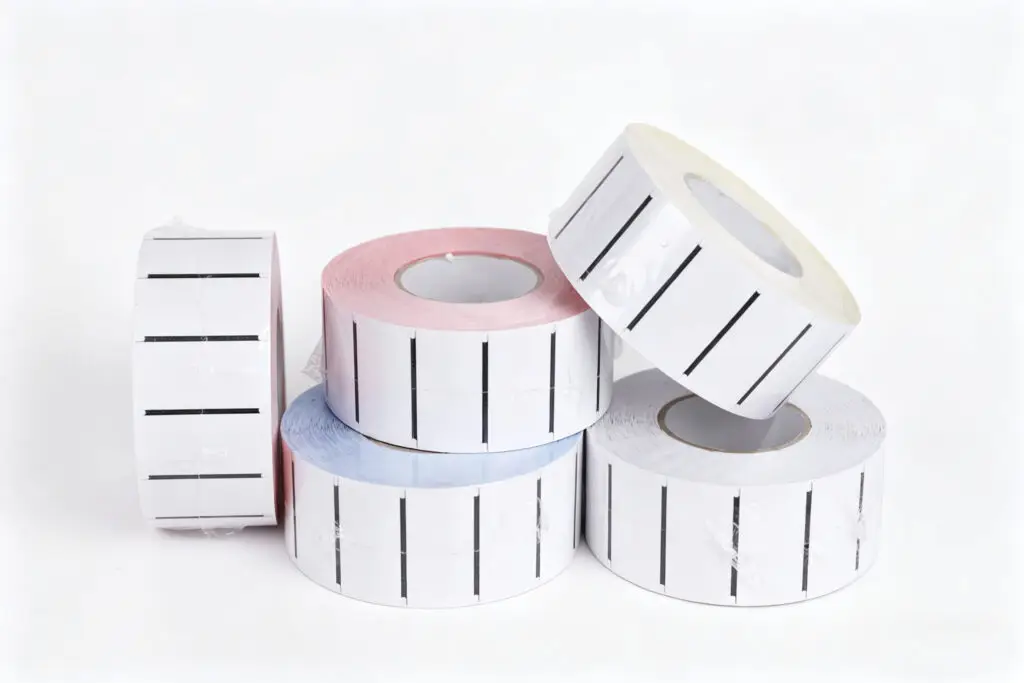
Table of Contents
ToggleUnderstanding Thermal Labels
What Are Thermal Labels?
Thermal labels are labels printed by thermal printers. They are widely used for shipping labels, barcode labels, warehouse labels, retail labels, and inventory tracking labels. One of their biggest advantages is speed. Thermal printing is designed for fast, continuous label printing, and in many cases it does not require ink or toner.
In day-to-day operations, thermal labels are everywhere. They are used on cartons, shelves, packages, pallets, and products across modern supply chains. Because they are efficient, easy to use, and well suited for high-volume printing, they have become one of the most common labeling solutions in logistics and warehouse operations.
Why Are Thermal Labels So Common in Logistics and Warehousing?
Thermal labels are so common in logistics and warehousing because they match the way these operations actually work. Warehouses, fulfillment centers, overseas warehouses, and e-commerce sellers often need to print large numbers of shipping labels and barcode labels every day. In these environments, printing speed, stability, and ease of use matter more than complicated printing methods.
Compared with traditional inkjet or laser printing, thermal printing is better suited for continuous label roll printing. It supports faster workflows, easier barcode tracking, and smoother inventory management. That is why thermal labels are widely used in shipping operations, warehouse barcode systems, retail distribution, and fulfillment operations.
What Is the Difference Between Direct Thermal and Thermal Transfer Labels
One of the most common buying questions is whether to choose direct thermal labels or thermal transfer labels. This difference matters because it affects cost, durability, and application fit.
Direct thermal labels do not require a ribbon. The printer creates the image directly on the label surface through heat. This makes them simple to use, cost-effective, and ideal for short-term applications such as shipping labels, logistics labels, and fast-moving warehouse operations. However, direct thermal labels may fade over time when exposed to heat, sunlight, friction, or long storage periods.
Thermal transfer labels require a ribbon during printing. They usually provide better durability, better resistance to wear, and longer-lasting print quality. For this reason, they are more suitable for long-term warehousing, industrial environments, outdoor use, and product tracking systems where labels need to remain readable for a longer time.
For many buyers, the practical choice is simple. If the labels are used for short-term shipping and fast turnover, direct thermal labels are often enough. If the labels need stronger durability and better long-term readability, thermal transfer labels are usually the better option.
For a more detailed comparison of cost, ribbon use, durability, and application fit, see our guide to direct thermal vs thermal transfer labels.
Understanding Thermal Tags
What Are Thermal Tags?
Thermal tags are tag products printed using thermal printing technology. Unlike regular thermal labels, they are usually not attached directly to a product surface. Instead, they are commonly used with punched holes, strings, plastic fasteners, or other hanging methods.
Thermal tags are widely used for apparel tags, inventory tags, warehouse sorting tags, plant tags, and logistics hanging tags. Businesses often use them to print barcodes, SKU numbers, prices, batch information, shipping data, and product identification details. In many operations, thermal tags are chosen when information needs to stay visible and scannable without being applied as an adhesive label.
Why Are Thermal Tags Different from Regular Thermal Labels?
The main difference between thermal tags and thermal labels is not the printer, but the way the product is used. Most thermal labels include adhesive backing and are made to stick directly onto cartons, bags, boxes, shelves, or products. Thermal tags, by contrast, are usually made for hanging rather than sticking.
Because of this difference, thermal tags are often made from thicker cardstock, tag stock, or synthetic materials. They need more rigidity and better handling performance so they can resist bending, tearing, or deformation during storage, transportation, scanning, and display. In simple terms, thermal labels are usually for attaching, while thermal tags are usually for hanging and identification.
Where Are Thermal Tags Commonly Used?
Thermal tags are used in many industries. In apparel, they are often used for price tags and product information tags. In warehousing and logistics, they are used for inventory classification, shipment identification, and warehouse sorting. In horticulture and agriculture, they are commonly used as plant tags. Some industrial applications also use thermal tags for parts tracking and batch control.
Their growing popularity comes from flexibility. Unlike traditional pre-printed tags, thermal tags allow businesses to print variable information on demand. This makes them better suited for modern inventory control, barcode tracking, and supply chain management workflows.
For retail stores comparing shelf labels, hanging price tags, and thermal tag options, see our guide to retail price tag solutions.
Choosing the Right Product
What Should Buyers Focus on When Choosing Thermal Labels?
When choosing thermal labels, the most important question is not simply size or price. The real question is whether the labels can perform reliably in the actual application environment.
For example, labels used in shipping workflows usually need fast printing, clear scanning, and cost efficiency. Labels used in warehouse barcode tracking may need better long-term readability and stronger scan performance. If the labels will be used in cold-chain logistics, humid warehouses, or industrial environments, buyers may also need to consider waterproof materials, stronger adhesive performance, and better stability under temperature changes.
That is why buyers usually need to look at printer compatibility, label roll specifications, adhesive type, application surface, and storage conditions. Choosing the right label for the application is usually more important than choosing the cheapest label.
If your labels also need fixed logos, color blocks, repeated layouts, or branding elements, you may want to compare blank thermal labels with pre-printed thermal labels.
What Should Buyers Focus on When Choosing Thermal Tags?
When choosing thermal tags, buyers often need to focus on different priorities. Since tags are usually hung rather than applied with adhesive, material thickness, rigidity, tear resistance, and scan readability become especially important.
In apparel retail, appearance and print clarity may matter more. In warehousing, logistics, and industrial tracking, durability and barcode readability may matter more. In wet, cold, or outdoor environments, buyers may need to consider synthetic tag materials or thermal transfer printing for better resistance and longer service life.
Buyers should also confirm that the thermal tags match their existing thermal printers, including size, roll diameter, core size, and printing method. When these details are confirmed early, large-volume purchasing becomes much smoother and more reliable.
How Can Buyers Decide Between Thermal Labels and Thermal Tags?
For first-time buyers, the easiest way to decide is to ask one simple question: does the information need to be stuck on, or hung on?
If the label needs to be attached directly to cartons, packaging, shelves, pallets, or products, thermal labels are usually the right choice. If the information needs to hang from apparel, inventory, plants, or other items without adhesive, thermal tags are usually the better fit.
In practical terms, shipping labels, barcode labels, retail shelf labels, and package identification usually belong to the thermal label category. Apparel tags, hanging inventory tags, and other thicker identification products usually belong to the thermal tag category. A good buying decision starts with the workflow, not just the unit price.
Why Thermal Labels and Tags Matter
Why Have Thermal Labels and Tags Become So Important in Modern Supply Chains?
As e-commerce, retail, logistics, and automated warehousing continue to grow, businesses need labeling systems that are fast, accurate, and flexible. Labels and tags are no longer just simple printed items. They now support barcode tracking, inventory management, retail pricing, shipping identification, warehouse operations, and broader supply chain workflows.
Thermal labels and tags have become important because they support on-demand printing, variable information, high-volume production, and daily operational efficiency. They also work with widely used thermal printer brands such as Zebra, TSC, Honeywell, and Brother, which makes them practical for many business environments.
For buyers, this means thermal labels and tags are not minor accessories. They are basic operational materials that can affect shipping accuracy, warehouse efficiency, scanning performance, and overall workflow reliability.
Why Is It Worth Understanding This Topic Before Buying?
Many buyers search for terms like What Are Thermal Labels and Tags, Direct Thermal vs Thermal Transfer, or What Are Thermal Tags before they send an inquiry. The reason is simple. They want to understand what they actually need before discussing material, size, adhesive, roll specifications, compatibility, or pricing.
A clear understanding of thermal labels and tags helps reduce purchasing mistakes. It makes it easier to compare suppliers, evaluate product fit, and choose solutions that match real business needs. In B2B purchasing, that clarity often saves more time and cost than focusing only on the lowest quote.
Conclusion
Thermal labels are usually used for sticking, while thermal tags are usually used for hanging. Both are important tools for identification, barcode printing, tracking, and daily operational management, but they serve different applications and should be selected based on how they will actually be used.
For businesses in logistics, e-commerce, warehousing, retail, apparel, and industrial operations, understanding thermal labels and tags is part of understanding their own labeling needs. When buyers start with the application, then evaluate materials, printing methods, and compatibility, the purchasing process becomes more accurate, efficient, and professional.
Further Reading
If you are still comparing options, these guides may help you narrow down the right thermal label or tag solution:
Need Help Choosing the Right Thermal Labels or Tags?
Choosing the right thermal labels or thermal tags usually starts with the application. Different use cases may require different materials, printing methods, adhesives, and roll specifications.
At Ruikang Label, we support custom thermal labels and thermal tags for shipping, warehousing, retail, barcode tracking, and other thermal printing applications. If you are evaluating options for size, material, adhesive, or printer compatibility, contact us for a tailored recommendation and quote.