
Thermal Label Adhesives: A Practical Buyer’s Guide for Custom Labels
A thermal label may look simple, but the adhesive behind it often decides whether the label performs well in real use. The right adhesive helps the label stay in place, scan clearly, peel cleanly when needed, and survive the environment where it will be used.
For buyers sourcing custom thermal labels, adhesive selection should not be treated as a small detail. A shipping label on a corrugated box, a retail price tag on a product package, a warehouse shelf label, and an industrial label on a plastic container may all require different adhesive choices.
This guide explains common adhesive options for thermal labels in a simple, procurement-friendly way. If you are still comparing printing methods, you may also want to read our guide on direct thermal vs thermal transfer labels. For retail use cases, see our retail price tags solutions. For a broader introduction, visit what are thermal labels and tags.
Why Adhesive Choice Matters for Thermal Labels
Thermal label adhesive does more than simply make the label “sticky.” It affects how quickly the label bonds to a surface, how long it stays attached, whether it can be removed cleanly, and how it performs under temperature, moisture, friction, or storage conditions.
A standard direct thermal adhesive label roll is often used for shipping, warehouse, and short-term identification. It prints without a ribbon and is cost- effective for many daily operations. However, if the label needs stronger durability, longer life, or better resistance to handling, a thermal transfer label with a more stable adhesive may be a better choice.
In custom label production, adhesive selection usually starts with four questions: What surface will the label be applied to? How long does it need to stay on? What environment will it face? Does it need to be removable or permanent?
Thermal Label Adhesives Should Be Matched by Use and Chemistry
Thermal label adhesives can be understood in two ways. The first is by application, such as permanent adhesive, removable adhesive, high-tack adhesive, low-temperature adhesive, or non-adhesive construction. The second is by adhesive chemistry, such as rubber-based, acrylic-based, silicone-based, or hybrid adhesive systems.
For buyers, the most useful approach is to combine both. For example, removable adhesive thermal transfer labels are not simply “less sticky” labels. They are designed to hold during use and release more cleanly when removed. Similarly, permanent adhesive thermal transfer labels are not just stronger labels; they need the right adhesive chemistry for the surface, environment, and expected service life.
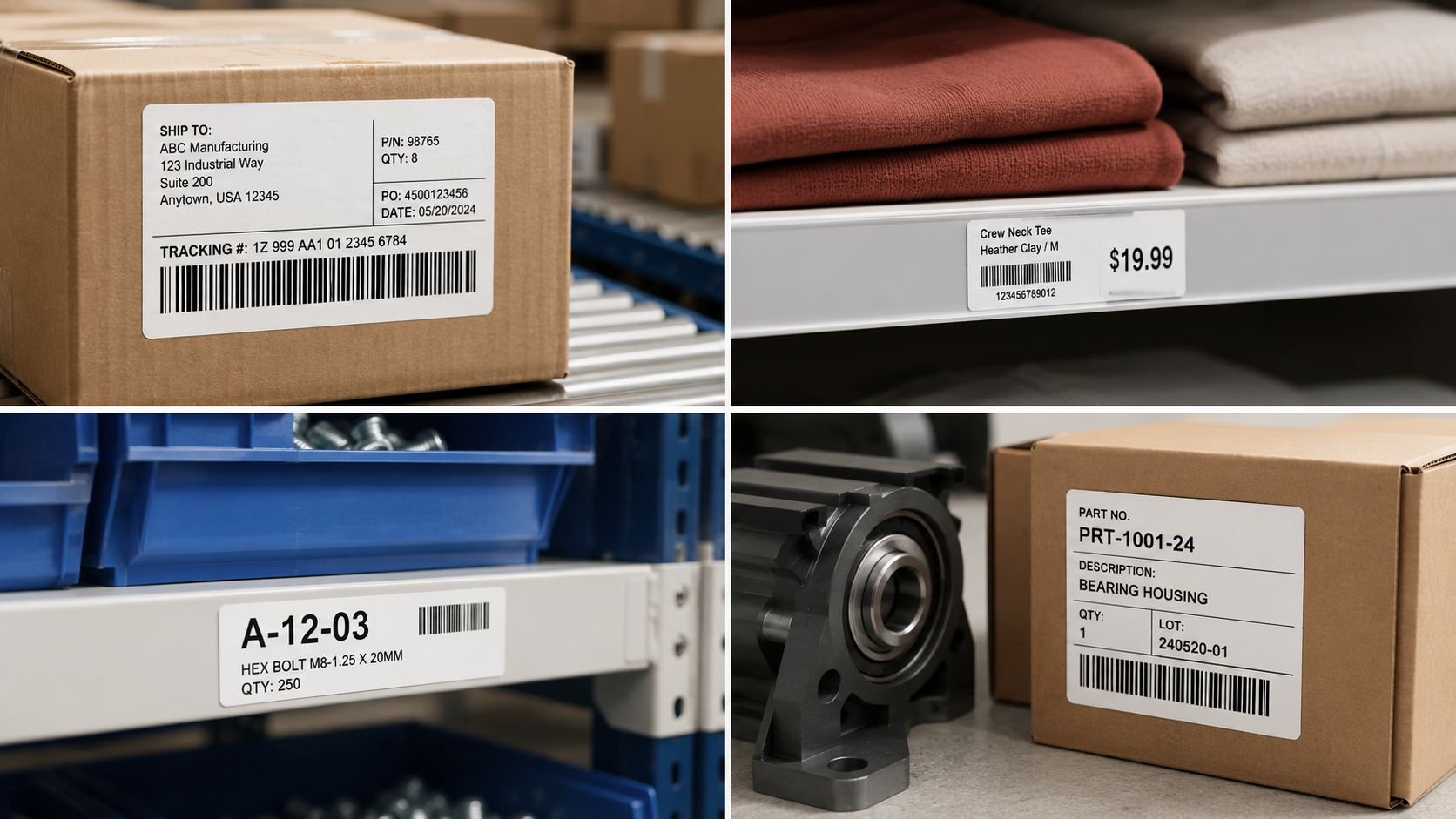
Common Thermal Label Adhesive Options by Application
| Application Need | Common Adhesive Type | Typical Adhesive Base | Suitable Thermal Label Format | Key Concern |
|---|---|---|---|---|
| Short-term shipping, logistics, and warehouse handling | General permanent adhesive | Rubber-based or acrylic-based | Direct thermal adhesive label roll | Cost, initial tack, print clarity, carton adhesion |
| Retail price tags and promotional labels | Removable adhesive | Removable acrylic or modified rubber-based adhesive | Removable adhesive thermal transfer labels | Clean removal, low residue, no package damage |
| Long-term inventory, shelf labels, and product identification | Permanent adhesive | Acrylic-based adhesive | Permanent adhesive thermal transfer labels | Long-term bonding, moisture resistance, durability |
| Industrial containers, equipment, or difficult surfaces | High-tack or industrial removable adhesive | Modified acrylic, rubber-based, or hybrid adhesive | Removable adhesive industrial thermal transfer labels | Surface texture, temperature, removability, handling conditions |
| Branded retail labels or color-coded warehouse labels | Permanent or removable adhesive | Acrylic-based or rubber-based adhesive | Printed adhesive thermal label roll | Pre-printed design, variable data printing, label life |
| Tickets, tags, receipts, and hang tags | No adhesive | Non-adhesive construction | Non adhesive thermal labels (thermal tags) | Paper weight, perforation, hole punching, printer compatibility |
Rubber-Based Adhesives: Fast Tack for Short-Term Use
Rubber-based adhesives are known for strong initial tack. This means the label grabs the surface quickly after application. For corrugated boxes, general packaging, plastic bags, and common logistics surfaces, rubber-based adhesives often provide good performance at a practical cost.
This type of adhesive is commonly used for shipping labels, warehouse labels, and short-term handling labels. Many direct thermal adhesive label roll products use adhesive systems with this kind of performance because logistics labels need fast application, reliable carton bonding, and efficient production cost.
The limitation is long-term resistance. Rubber-based adhesives usually do not perform as well as acrylic-based adhesives under heat, UV exposure, aging, or certain chemical conditions. If the label needs to remain readable and attached for months, or if it will face outdoor exposure or high temperature, a more durable adhesive system may be needed.
Acrylic-Based Adhesives: Stable Performance for Long-Term Labels
Acrylic-based adhesives are often selected for labels that need better long-term stability. They generally offer stronger resistance to aging, moisture, light exposure, and temperature changes compared with basic short-term adhesive systems.
For permanent adhesive thermal transfer labels, acrylic-based adhesives are often a strong option. Thermal transfer printing already provides better print durability than direct thermal printing in many applications. When paired with a stable permanent adhesive, it becomes suitable for inventory control, product identification, warehouse shelf labels, and industrial tracking.
Acrylic adhesive formulas can also be adjusted for specific needs. Some formulas focus on low-temperature performance, some are designed for better clarity, and some improve bonding on plastic, metal, or coated packaging. For custom thermal labels, this flexibility is important because different buyers may use the same label size on very different surfaces.
Removable Adhesives: Controlled Removal, Not Weak Adhesion
Removable adhesive is often misunderstood as simply “weaker glue.” In reality, a good removable adhesive needs balance. It should hold the label during use, but allow the label to be removed without tearing the surface or leaving heavy residue.
Removable adhesive thermal transfer labels are useful for retail price tags, promotional labels, temporary inventory labels, returnable containers, and replaceable product information. They are especially valuable when the label needs to be removed cleanly after a sale, inspection, or temporary process.
For more demanding environments, removable adhesive industrial thermal transfer labels may be required. These labels need to consider not only removability, but also surface texture, dust, oil, humidity, temperature, and handling. In industrial use, “removable” does not mean casual or low-performance. It means the adhesive must be controlled for both bonding and release.
Permanent Adhesives: Long-Term Bonding with the Right Surface Match
Permanent adhesive is one of the most common choices for thermal labels. It is used for shipping labels, carton labels, warehouse labels, product labels, and long-term tracking labels.
However, permanent adhesive does not simply mean “the strongest possible glue.” If the adhesive is too aggressive, labels may be difficult to reposition during application. If the adhesive does not match the surface, it may feel strong at first but lift at the edges later.
For permanent adhesive thermal transfer labels, both the facestock and adhesive should be considered together. If the label is applied to corrugated cartons, a standard permanent adhesive may be enough. If it is applied to plastic drums, metal parts, cold-chain packaging, or outdoor shipping containers, temperature resistance, moisture resistance, and surface energy become more important.
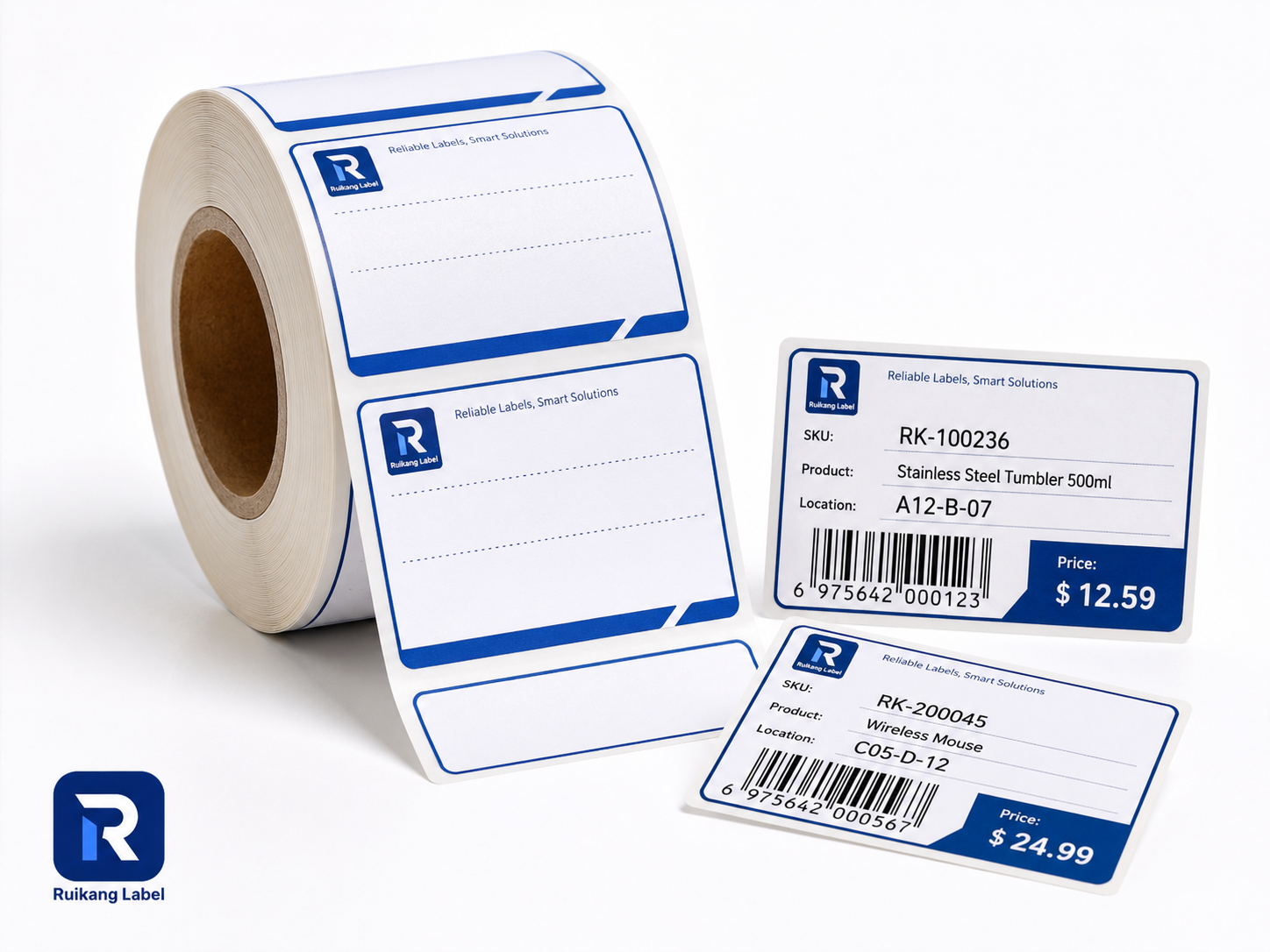
Printed Adhesive Thermal Label Rolls: Adhesive Must Fit the Design and Use Case
A printed adhesive thermal label roll is used when the label needs pre-printed information such as a logo, color block, border, warning text, category mark, or fixed layout. Variable data, such as barcodes, prices, dates, or SKU information, can still be printed later by a thermal printer.
These labels are common in retail, warehouse, logistics, healthcare, and product packaging workflows. The adhesive choice depends on the final use. A retail promotion label may need removable adhesive. A warehouse color-coding label may need permanent adhesive. A long-term shelf label may benefit from a more stable acrylic-based adhesive.
Pre-printed thermal labels are not only about printing. Ink, thermal coating, adhesive, liner, and printer compatibility all need to work together. Poor matching can affect barcode readability, print clarity, label feeding, or automatic labeling performance.
Non Adhesive Thermal Labels: A Different Label Structure
Non adhesive thermal labels do not use a pressure-sensitive adhesive. They are commonly used for tickets, receipts, queue numbers, admission passes, apparel hang tags, and other applications where the printed item does not need to stick to a surface.
For these products, the key factors are not adhesive strength. Buyers should focus on paper weight, thermal coating, perforation, die-cutting, hole punching, roll size, and printer compatibility. If the label needs to hang from a product, a thermal tag may be more suitable. If it needs to stick to packaging, an adhesive thermal label is the better option.
Surface Material Can Change Adhesive Performance
The same adhesive can perform very differently on different surfaces. Corrugated cartons, plastic bags, glass bottles, metal parts, frozen packaging, coated paper, and rough recycled paper all create different bonding conditions.
Cartons are usually easier to label, but dust, moisture, or loose recycled fibers may reduce adhesion. Plastic surfaces vary widely depending on the material. Some low- surface-energy plastics are harder to bond to. Glass and metal are smooth, but oil, condensation, or low temperature can interfere with adhesion.
That is why custom thermal label sourcing should include surface information. A buyer saying “we need a stronger adhesive” is less useful than saying “we apply this label to a cold plastic container in a refrigerated warehouse.” The second description makes material selection much more accurate.
Information Buyers Should Confirm Before Ordering Custom Thermal Labels
| Information to Confirm | Why It Matters | Examples |
|---|---|---|
| Label application | Helps determine direct thermal, thermal transfer, pre-printed, or non-adhesive construction | Shipping label, price tag, warehouse shelf label, industrial product label |
| Application surface | Adhesion depends heavily on the surface material | Corrugated carton, plastic bag, glass, metal, frozen packaging |
| Required label life | Helps choose removable, standard permanent, or long-term durable adhesive | 3 days, 1 month, 6 months or longer |
| Use environment | Determines whether temperature, moisture, oil, or chemical resistance is needed | Dry warehouse, cold room, outdoor transport, high-temperature workshop |
| Printing method | Affects facestock and adhesive pairing | Direct thermal adhesive label roll or thermal transfer labels |
| Pre-printing requirements | Determines artwork, color, coating, and printable variable-data area | Logo, color coding, warning text, fixed border, barcode area |
| Removability requirement | Helps select removable adhesive or permanent adhesive | Retail labels often need clean removal; shipping labels usually do not |
| Roll specifications | Ensures compatibility with printers and automatic labeling equipment | Core size, outer diameter, labels per roll, gap, roll direction |
How to Choose the Right Thermal Label Adhesive
For shipping and short-term logistics
A direct thermal adhesive label roll is often the most practical option for standard shipping, warehouse handling, and short-term logistics. It is economical, easy to print, and suitable for many carton and packaging applications.
For retail price tags and temporary labels
Removable adhesive thermal transfer labels are a good choice when labels need to be removed cleanly from product packaging, shelves, containers, or promotional materials. The key is to balance holding power during use with clean release after removal.
For long-term identification
Permanent adhesive thermal transfer labels are better suited for inventory tracking, product identification, warehouse shelf labeling, and applications where the label must remain readable and attached for a longer period.
For industrial or difficult surfaces
For low temperature, moisture, oil, rough surfaces, plastic containers, or returnable industrial packaging, buyers may need removable adhesive industrial thermal transfer labels, high-tack adhesives, or custom adhesive systems.
For tickets, tags, and non-stick applications
When the product does not need to stick to a surface, non adhesive thermal labels may be the right structure. These are suitable for tickets, hang tags, queue labels, and printed slips.
Conclusion: Adhesive Selection Should Follow the Real Use Case
Choosing adhesive for thermal labels is not just a choice between “strong” and “weak.” It is a balance between application surface, label life, environment, print method, removability, and cost.
For procurement teams, the best starting point is to define where the label will be applied, how long it needs to stay in place, whether it needs to be removed, and whether it will face cold, heat, moisture, oil, or friction.
Once these details are clear, it becomes much easier to choose between direct thermal labels, thermal transfer labels, printed adhesive thermal label rolls, removable adhesive labels, permanent adhesive labels, or non adhesive thermal labels. With the right adhesive and material combination, thermal labels can perform reliably in shipping, retail, warehouse, and industrial applications.